
Composite decking guides
Plain answers on composite and PVC decks, from choosing a board to framing it, laying it and living with it. Each guide gives the answer first, then the detail, in the order you will need it.

Choosing a board
What composite and PVC are, whether they suit you, and how the boards differ. 12 guides.
 1.1
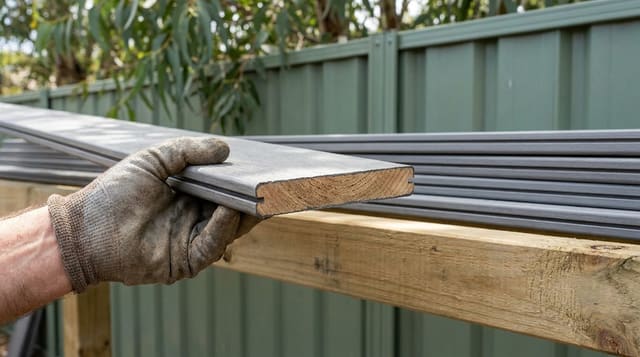
1.1What is composite decking? A plain answer for Australian homeowners
Composite decking is a board made by blending wood fibre with plastic and extruding it into a decking profile.
 1.2
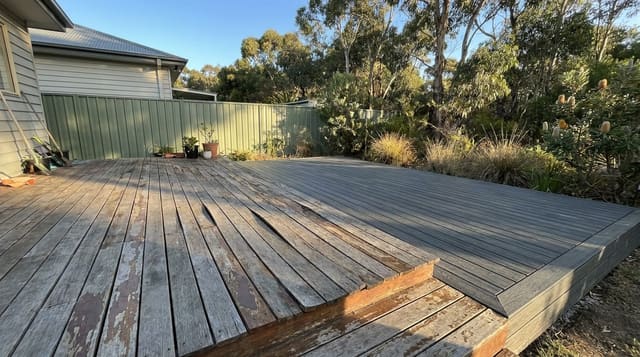
1.2Why so many Australians are switching from timber to composite decking
People switch to composite to stop oiling, and to be rid of the splinters and rot that timber gets without it.
 1.3
1.3Is composite decking worth it? How to decide without the sales pitch
Composite decking is worth it if you will own the deck long enough for the oil and labour you avoid to catch up with the higher upfront cost, and if the site has enough shade that heat will not stop you using it.
 1.4
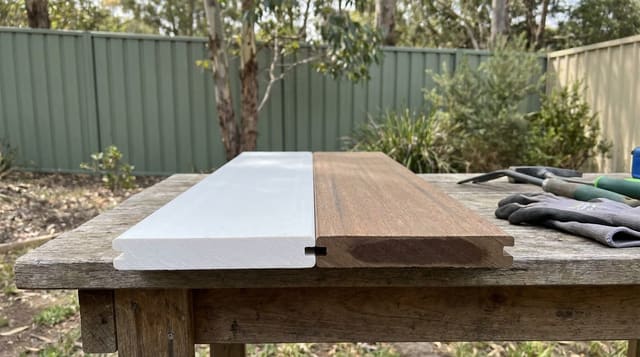
1.4PVC vs composite decking: what actually differs
PVC decking has no wood in it, so it's lighter than composite and resists water and mould better.
 1.5
1.5What is PVC decking and who is it for?
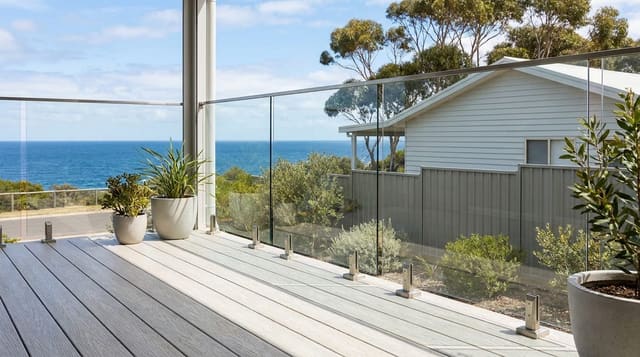
PVC decking is a deck board made entirely of plastic, with no wood fibre.
 1.6
1.6Capped vs uncapped composite decking: what the cap changes
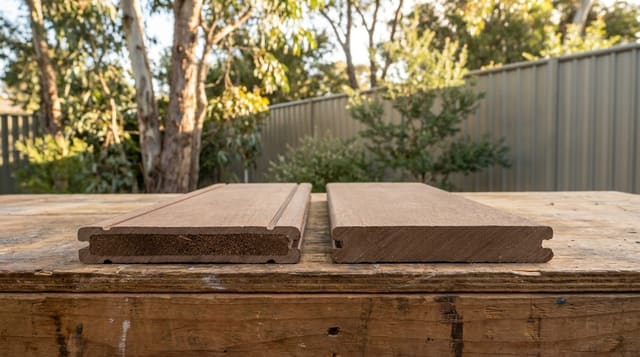
Capped composite decking has a polymer shell fused over the wood-plastic core.
 1.7
1.7Hollow vs solid composite decking boards: weight, feel and where each belongs
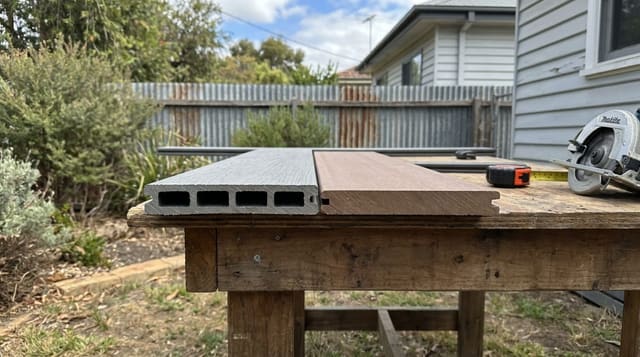
Comparing one Australian maker's hollow and solid boards, the hollow one weighs about a quarter less, needs closer joists and carries a shorter warranty.
 1.8
1.8Composite decking myths, checked against what owners actually report
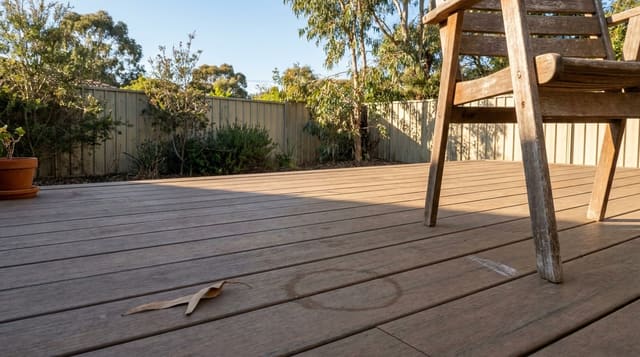
Composite decking needs far less work than timber, but it still needs washing and it still weathers.
 1.9
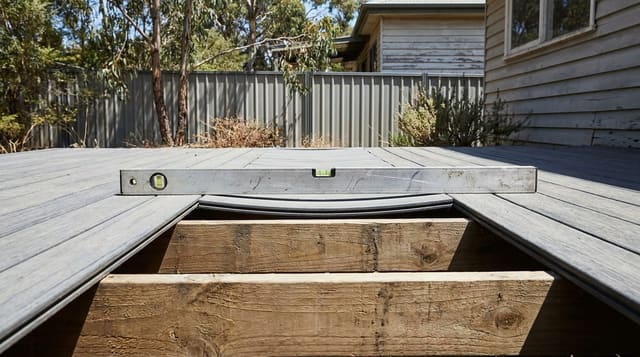
1.9Composite decking problems and disadvantages owners report
The composite decking problems owners report include heat underfoot, mould on shaded decks, scratches, bounce on wide joist centres, movement in the heat, static, and warranties that exclude the thing that went wrong.
 1.10
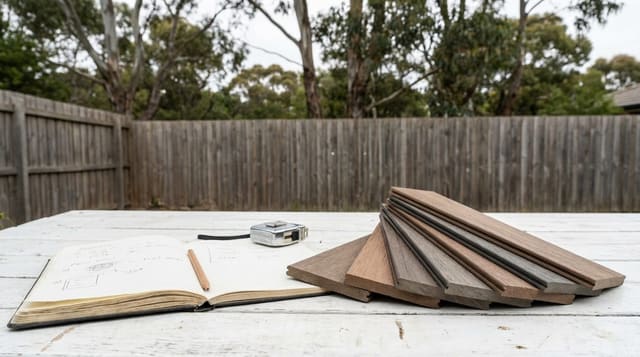
1.10Composite decking: the questions people ask most, answered
Composite decking is wood fibre and plastic made into a deck board that doesn't rot or need oiling.
 1.12
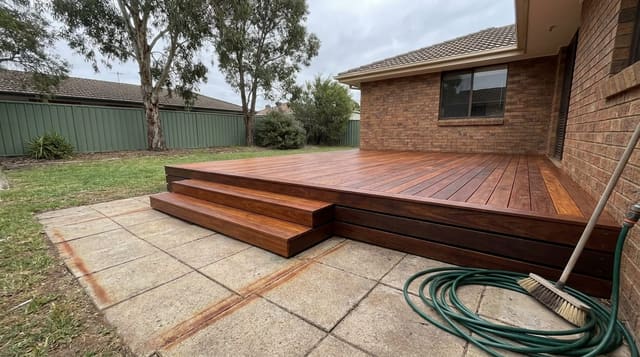
1.12Merbau decking: tannin bleed, upkeep and lifespan vs composite
Merbau decking is a dense imported hardwood rated Class 1 for durability above ground, the top class.
 1.40
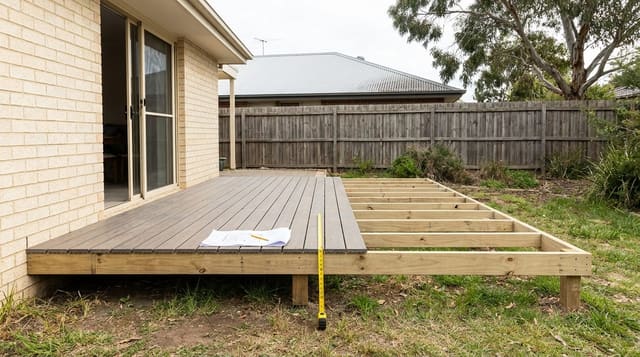
1.40Do you need a permit for a deck? The rules by state
A deck building permit depends on your state and on the deck's height, area and roof.


The frame
Why composite needs a frame built for it, and how to build or check one. 8 guides.
 2.1
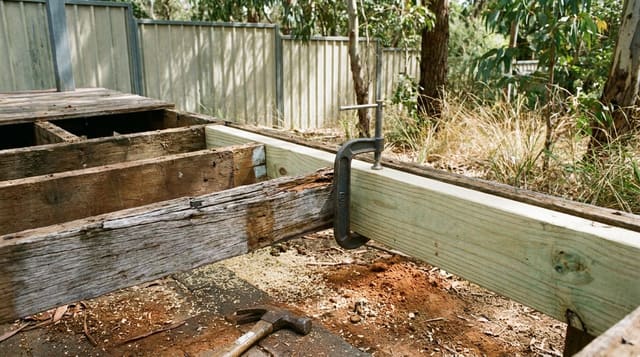
2.1Can you lay composite decking on an existing deck frame? Usually not as it is
Usually not as it stands. An old deck frame was built for timber boards, which can span wider joist centres than composite makers allow, and it may be rotting at the tops and ends or sitting out of level.
 2.2
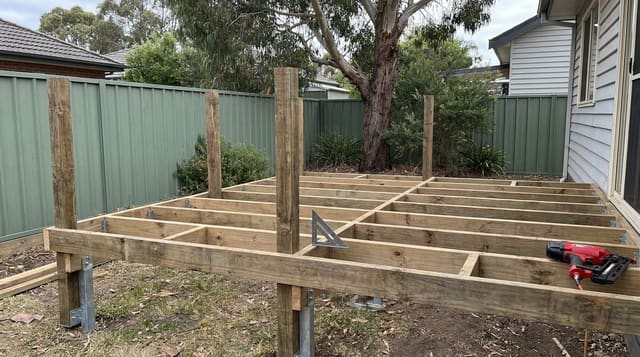
2.2How to build a deck frame for composite decking
Build a composite deck frame like a timber one, but at the board maker's joist centres, dead level, and with doubled joists wherever boards meet end to end.
 2.3
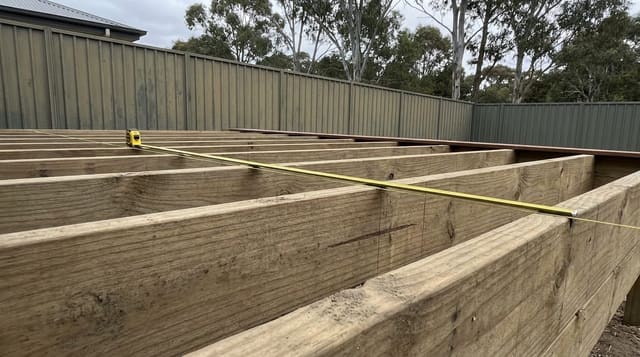
2.3Joist spacing for composite decking: why it is tighter than hardwood
Composite decking joist spacing in Australian install guides is 450 mm or 400 mm between centres for a straight residential lay, closer again for stairs, commercial decks and angled boards, and tighter than many timber decks are framed.
 2.4
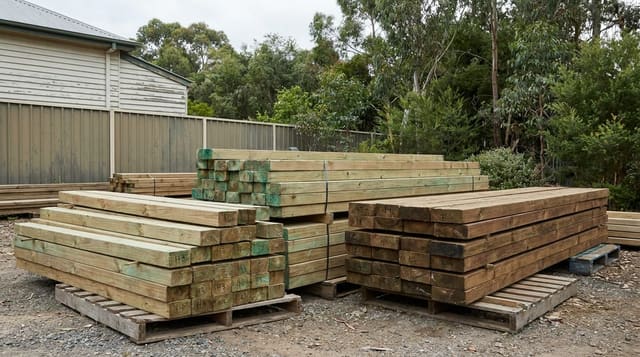
2.4H3 or H4 treated pine under a composite deck? Where each one goes
Use H3 pine for bearers and joists that sit well clear of the ground and can dry out.
 2.5
2.5Steel vs timber deck frame for composite decking
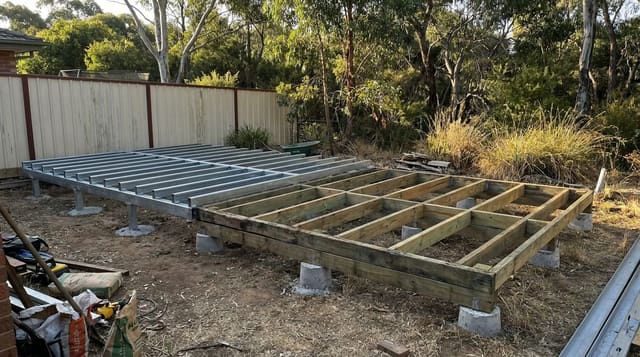
Steel deck framing makes sense where a timber frame would be the first thing to fail, such as a low deck over damp ground or a block in a bushfire zone.
 2.6
2.6Aluminium deck framing for composite decking: when it makes sense
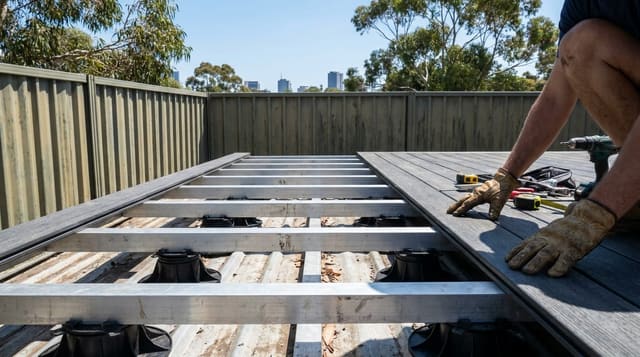
An aluminium deck frame makes sense on rooftops, balconies and low decks over concrete, where height is tight or the surface can't take a fixing.
 2.7
2.7Building a ground-level composite deck: ventilation, drainage and height
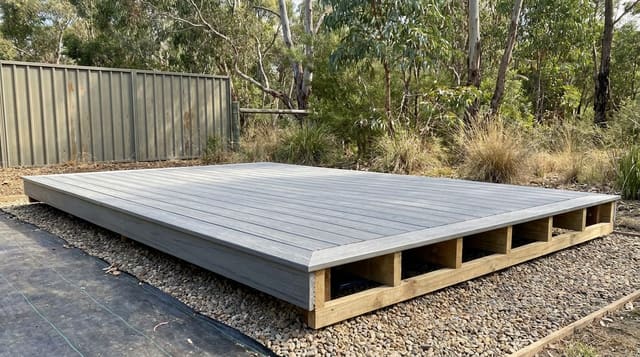
A ground-level composite deck works because the boards don't rot, but the frame under them still can.
 2.8
2.8Composite decking over concrete: sleepers, pedestals and drainage
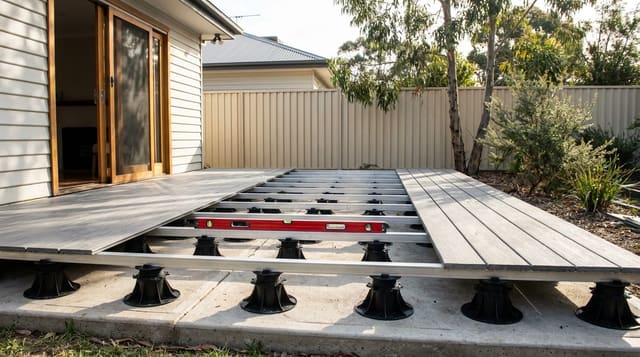
Yes, composite decking can be installed over concrete, but only on a frame.


Building it
Laying the boards, fixing them, the gaps and borders, and stairs, pools and bushfire zones. 7 guides.
 3.1
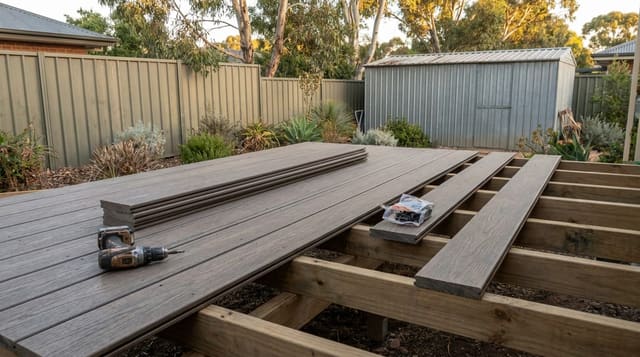
3.1How to install composite decking: the steps that matter
Install composite decking on a level frame at the joist centres in the maker's guide.
 3.2
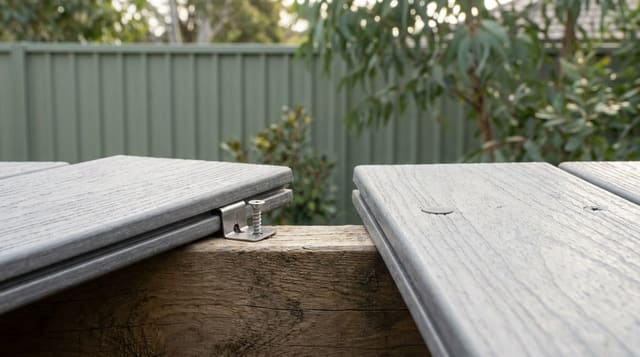
3.2Hidden clips vs face screws for composite decking
Composite decking screws and hidden clips both work, but the board decides.
 3.3
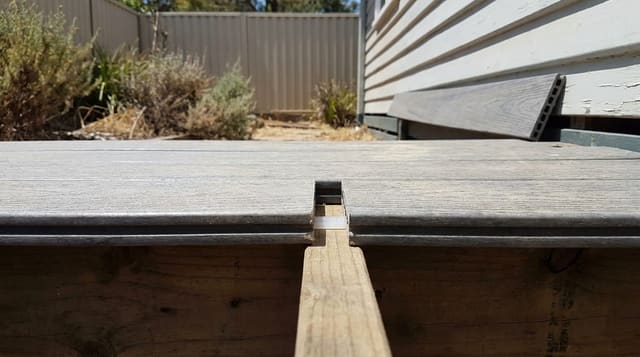
3.3Expansion gaps in composite decking: why the end gap matters most
Composite decking expansion is mostly along the board, not across it, so the gap that matters is at the board ends and at walls.
 3.4
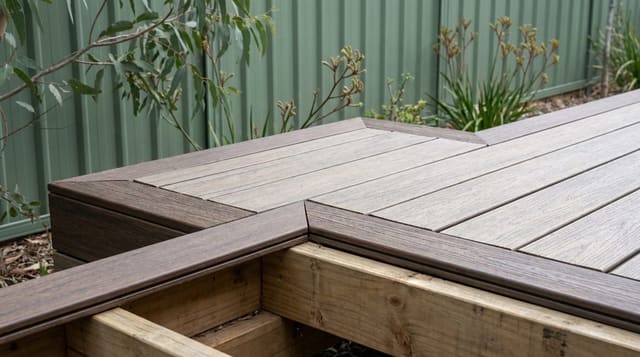
3.4Picture-frame borders on a composite deck: how to plan and frame them
A picture-frame border is a board run around the deck edge so the field boards finish against it, hiding cut ends and hollow cores.
 3.5
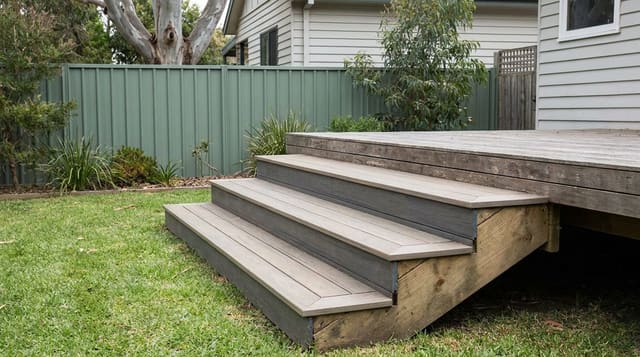
3.5Composite decking stairs: framing, treads and nosings
To frame deck stairs for composite treads, space the stringers at the board maker's stair centres, which are closer than a thick timber tread needs, and fit a riser board behind every tread with a small nosing overhang.
 3.6
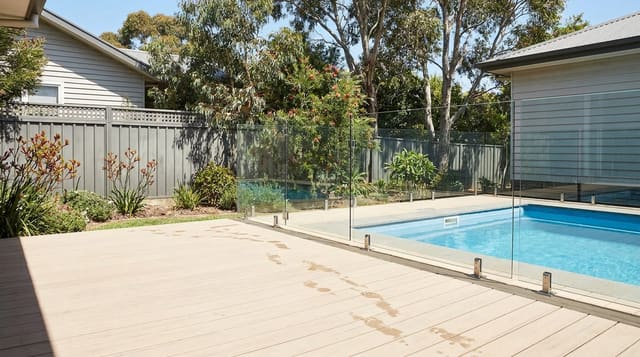
3.6Composite decking around pools: heat, slip, salt and chlorine
Composite decking around a pool stays splinter-free under bare feet and shrugs off splash without oiling.
 3.7
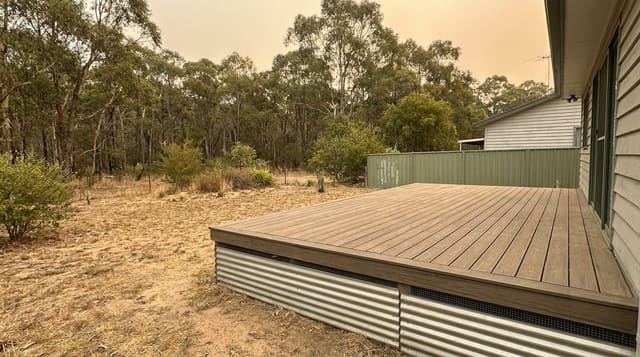
3.7Composite decking fire ratings and BAL zones in Australia
1 bushfire test, and only when it's built the way the maker specifies.


Living with it
Heat underfoot, cleaning, fading and scratches, paint, and how long it lasts. 5 guides.
 4.1
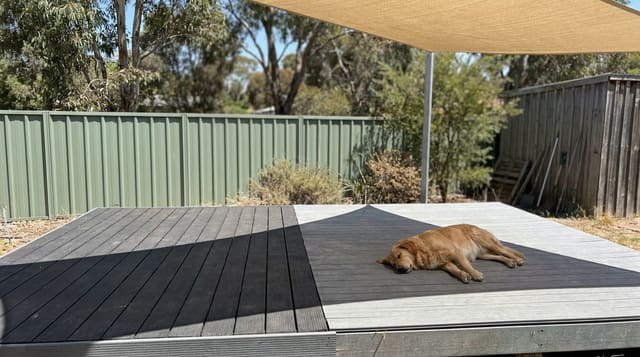
4.1Does composite decking get hot? What the colour does and what you can do
Yes. A composite deck in full sun can get too hot for bare feet, and some makers say their boards run hotter than timber.
 4.2
4.2How to clean composite decking and get rid of mould
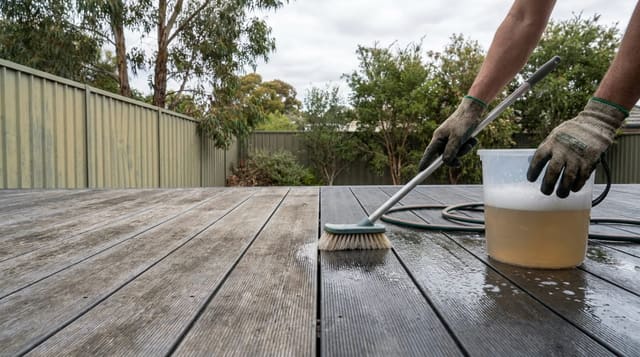
Wash composite decking with warm soapy water and a soft brush along the boards, then hose it off.
 4.3
4.3Composite decking fading and scratches: the first year and after
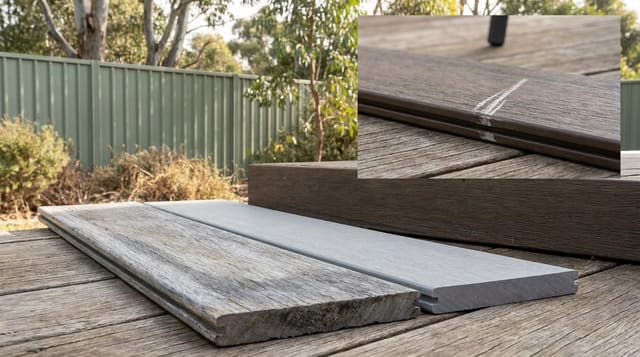
Composite boards shift colour in their first months outside, then settle.
 4.4
4.4Can you paint or stain composite decking?
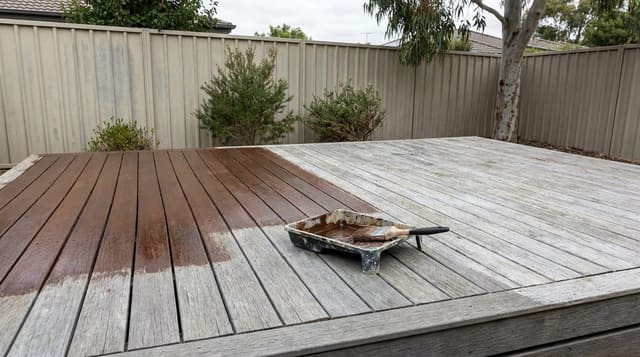
Usually no. The makers of capped composite boards advise against paint and stain, and Trex warns it may void the fade and stain warranty.
 4.5
4.5How long does composite decking last? Lifespan and what warranties really cover
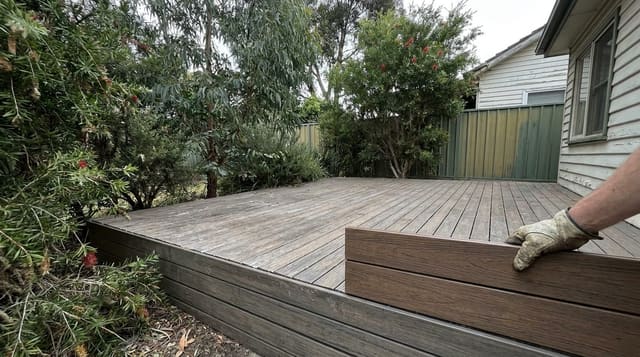
Composite boards carry warranties from ten to fifty years, and owners report decks in good shape at ten to thirteen years.


How the guides are written
Every guide gives its answer in the first lines, then the detail, in plain Australian English and metric units. Prices and product specifications are never typed into a guide; they come from each board’s own page, where the source and the date it was checked sit beside the figure.
Before a guide goes live it passes an editorial check that its sources resolve, its figures carry a citation and its prose reads like a person wrote it. The byline names a real person, and the sources sit at the foot of each guide with the day they were read.